News
Abogó la Argentina por la no intervención militar en Siria
El Ministerio de Relaciones Exteriores y Culto envió esta mañana un comunicado en el que la Argentina, como presidente del Consejo de Seguridad de la ONU, emite su postura sobre el conflicto que se vive en Siria. A continuación, el texto completo enviado por la cartera que dirige Héctor Timerman: “La Argentina, que en la […]
 El Ministerio de Relaciones Exteriores y Culto envió esta mañana un comunicado en el que la Argentina, como presidente del Consejo de Seguridad de la ONU, emite su postura sobre el conflicto que se vive en Siria.
A continuación, el texto completo enviado por la cartera que dirige Héctor Timerman:
El Ministerio de Relaciones Exteriores y Culto envió esta mañana un comunicado en el que la Argentina, como presidente del Consejo de Seguridad de la ONU, emite su postura sobre el conflicto que se vive en Siria.
A continuación, el texto completo enviado por la cartera que dirige Héctor Timerman:
“La Argentina, que en la actualidad está ejerciendo la Presidencia del Consejo de Seguridad, hace pública su posición ante la fuerte posibilidad de una intervención militar extranjera en la República Siria.
La posible utilización de armas químicas, prohibidas por la comunidad de naciones, en Siria añade un elemento de gravedad inexcusable que obliga a todos los Estados a comprometerse para encontrar una solución a la crisis.
The Ministry of Foreign Affairs this morning sent a statement that Argentina , as president of the Security Council of the UN, issues its position on the conflict that exists in Syria.
Below , the full text sent by the ministry that directs Hector Timerman :
"Argentina , which is currently exercising the Presidency of the Security Council made public its position on the strong possibility of foreign military intervention in the Syrian Republic .
The possible use of chemical weapons, banned by the community of nations , in Syria adds an element of seriousness inexcusable that requires all states to commit to finding a solution to the crisis. Y la Argentina ha demostrado con acciones su firme compromiso con la no-proliferación y la eliminación de las armas de destrucción masiva. Nuestro país es Parte de la Convención sobre Armas Químicas y es un activo impulsor de la destrucción de estas armas y propicia evitar cualquier forma de su desarrollo. La utilización de armas químicas letales en todas sus formas es un crimen de guerra y de lesa humanidad. Tanto los gobiernos como los grupos armados insurgentes que hayan hecho uso de dichas armas deben ser juzgados y castigados por la Justicia, específicamente por el Tribunal Penal Internacional.
Por eso apoyamos decididamente la investigación puesta en marcha por el Secretario General y esperamos contar con resultados contundentes, transparentes, objetivos e imparciales a la brevedad. Argentina, junto a toda América Latina, ha sido enfática en la defensa del principio de no intervención militar extranjera. Ante la negativa de los Estados Unidos para aplicar la doctrina Monroe en defensa de Venezuela, que sufría un bloqueo naval por potencias europeas en 1902, la Argentina impulsó una nueva doctrina en contra del intervencionismo militar. La doctrina Drago, en honor a su impulsor el Canciller Luis María Drago, que comenzó atacando la intervención por tema de deudas evolucionó como principio general, ello a partir de la experiencia que indica que las intervenciones militares libradas a decisiones unilaterales es uno de los elementos más disruptivos de la seguridad internacional.
El surgimiento de las Naciones Unidas como órgano garante de la paz fue un avance fundamental que es necesario profundizar. En línea con lo expresado por la Presidenta Cristina Fernández de Kirchner, la responsabilidad de proteger civiles para justificar la intervención militar unilateral o por medio de alianzas circunstanciales puede dar lugar a que se abusen de los valores de paz y seguridad y se termine atacando precisamente los valores que se dice defender. No sumemos nuevos horrores a los horrores que ya sufrimos.
En este contexto, la Argentina se opone a una intervención militar. La intervención militar extranjera en forma de respuesta automática a la utilización de armas químicas sin siquiera esperar a que las Naciones Unidas determinen si se utilizaron y quienes las utilizaron, implica una derrota del sistema multilateral y un menosprecio a su sistema legal. Volvemos a reiterar el concepto que las Naciones Unidas no serán eficaces mientras los poderosos crean que sólo los débiles deben cumplir sus resoluciones. Para la República Argentina, no están dadas las condiciones para una solución militar extranjera ya que a pesar del tiempo transcurrido y de cientos de miles de víctimas, no se han puesto en práctica los mecanismos previstos en el derecho internacional. Nuestro país considera que operaciones militares extranjeras no harían otra cosa que agravar la situación, aumentarán las víctimas y el riesgo de derrame de la tragedia humanitaria a otros países de la región se acrecentará.
En este espíritu, es importante también reconocer que la provisión de armamentos a las partes en conflicto, lejos de definir la contienda, ha contribuido a multiplicar la sangre derramada por cientos de miles de inocentes. No se puede seguir proveyendo de armas a las zonas en conflicto y luego sentarse en este recinto para lamentarse que hay muertos. No se puede lamentar que haya muertos y decir que la solución ante la muerte es aumentar el número de muertos.
A la vez, la República Argentina no permitirá que la Naciones Unidas acepten resignarse a observar como se masacran civiles con armas químicas. La gravedad de la situación debe admitir la posibilidad de una intervención humanitaria sin fines ni medios militares y con mandato de la ONU. Sostenemos que en el supuesto en el que un miembro permanente del Consejo ejerciera el veto para impedir una intervención humanitaria no militar, quedaría una vez más plasmada una situación descripta por la presidenta de la República hace pocas semanas en el Consejo de Seguridad al decir que “cuando en la gestión de conflictos aparece el derecho de veto, la solución se torna mucho más difícil y por momentos imposible. Por lo tanto creemos que sería necesario revisar el funcionamiento de las instituciones en general de Naciones Unidas y en particular del Consejo de Seguridad.”
Si ello no es posible a través del Consejo de Seguridad, es tiempo para que la Asamblea General tome cartas en el asunto. Nuestro país propone otorgar el mandato necesario al Secretario General para definir la autoría de la masacre derivada del uso de armas químicas, y desde el conocimiento de lo sucedido debatir una eventual intervención humanitaria y diplomática avalada por la Asamblea General.
La República Argentina y otros países latinoamericanos sostenemos que en caso que exista una oposición a garantizar la asistencia y el acceso humanitario en Siria por parte de uno o más miembros con derecho a veto en el Consejo de Seguridad, se debería convocar a la Asamblea General a fin de resolver esta situación. Sin duda, llegar a esta instancia dejaría al desnudo que el consejo de Seguridad está contaminado por el juego de intereses de un pequeño grupo de países que, ejerciendo el “privilegio” del veto, vuelven a este órgano no sólo ineficaz sino irrelevante para la paz mundial.
Existen las herramientas para hacerlo.
En 1987 la Asamblea General aprobó la Resolución 42/37 sobre la prohibición de utilización de armas químicas y bacteriológicas, por la cual solicita al Secretario General de las Naciones Unidas llevar adelante investigaciones en respuesta a posibles usos de este tipo de armas, que pudieran constituir una violación del Protocolo de Ginebra de 1925 y otras leyes internacionales, para comprobar los hechos e informar sus resultados lo antes posible a los Estados miembro de la ONU.
Finalmente, otra opción es que los 15 cancilleres que representan a los países miembros del Consejo de Seguridad se convoquen ya mismo en Siria para exigir el cese de la violencia y el inicio de un diálogo entre las partes en conflicto. En síntesis, la República Argentina propone el embargo de armas, una intervención humanitaria liderada por el Secretario General, una reunión de emergencia de la Asamblea General o la acción en el terreno del conflicto de los cancilleres miembros del Consejo de Seguridad. Lo que Argentina jamás propondrá, ni avalará, es una intervención militar extranjera. El gobierno y el pueblo argentino no serán cómplices de nuevas muertes”.
Prensa Argentina
And Argentina has demonstrated its strong commitment to actions of non - proliferation and disarmament of weapons of mass destruction. Our country is a party to the Chemical Weapons Convention and is an active promoter of the destruction of these weapons and avoid any form of favorable development. The use of lethal chemical weapons in all its forms is a war crime and crimes against humanity . Both governments and armed insurgent groups who have made use of such weapons should be tried and punished by the law, specifically the International Criminal Court .That is why we strongly support the investigation launched by the Secretary General and look forward to strong results , transparent, objective and impartial shortly. Argentina , along with all of Latin America , has been emphatic in defending the principle of foreign military intervention. Given the refusal of the U.S. to implement the Monroe Doctrine in defense of Venezuela , who suffered a naval blockade by European powers in 1902 , Argentina prompted a new doctrine against military intervention . Drago Doctrine , named after its creator Chancellor Luis Maria Drago, who began attacking the debt issue intervention evolved as a general principle , that from experience indicating that military intervention is unilateral decisions left to one of the elements more disruptive of international security .
The emergence of the United Nations as a guarantor of peace organ was a major advance that should be deepened . In line with the statement by President Cristina Fernandez de Kirchner , the responsibility to protect civilians to justify unilateral military intervention or through circumstantial alliances can give rise to abuse of the values of peace and security and is finished attacking precisely the values they claim to defend . No we add new horrors to the horrors and suffering.
In this context, Argentina opposes military intervention. The foreign military intervention in the form of automatic response to the use of chemical weapons without even waiting for the United Nations and used to determine whether those who used them , implies a loss of the multilateral system and disregard for its legal system . We reiterate the notion that the United Nations will not be effective as the powerful created that only the weak must fulfill their resolutions . For Argentina, are not ripe for foreign military solution and that despite the time elapsed and hundreds of thousands of victims , have not implemented the mechanisms under international law . Our country believes that overseas military operations would not do anything but aggravate the situation , increase the risk of casualties and the humanitarian tragedy spill to other countries in the region will increase .
In this spirit, it is also important to recognize that the provision of arms to the warring parties away from defining the war , contributed to multiply the blood of hundreds of thousands of innocents. We can not continue supplying weapons to conflict zones and then sit in this room for regret that there dead. You can not regret that there are dead and say that the solution to death is to increase the number of dead.
At the same time , Argentina will not allow the United Nations to observe resigned acceptance as massacring civilians with chemical weapons. The gravity of the situation must admit the possibility of a nonprofit humanitarian intervention or military means and UN mandate . We argue that in cases in which a permanent member veto exercised to prevent non-military humanitarian intervention , would once again reflected a situation described by the President of the Republic a few weeks ago in the Security Council , saying " when in conflict management appears veto , the solution becomes much more difficult and at times impossible. We therefore believe it would be necessary to review the functioning of institutions in general and in particular UN Security Council . "
If this is not possible through the Security Council , it is time for the General Assembly to take action on the matter . Our country intends to grant the necessary mandate to the Secretary- General to define the authorship of the slaughter from the use of chemical weapons , and from the knowledge of what happened to discuss a possible humanitarian and diplomatic intervention endorsed by the General Assembly .
Argentina and other Latin American countries argue that if there is an opposition to ensure humanitarian access and assistance in Syria by one or more members with veto power in the Security Council should convene the General Assembly to order to resolve this situation. No doubt this instance would reach bare the Security Council is contaminated by the play of interests of a small group of countries , putting the "privilege" of the veto , return to this body not only ineffective but irrelevant to peace world .
There are tools to do so.
In 1987 the General Assembly adopted Resolution 42/37 on the prohibition of use of chemical and bacteriological weapons , by which requests the Secretary- General of the United Nations conduct research in response to possible uses of these weapons , which could be a violation of the Geneva Protocol of 1925 and other international laws , to establish the facts and report the results as soon as possible to UN member states .
Finally , another option is that the 15 foreign ministers representing the member countries of the Security Council to convene in Syria right now to demand the cessation of violence and starting a dialogue between the conflicting parties . In short , Argentina proposed an arms embargo , humanitarian intervention led by the Secretary General , an emergency meeting of the General Assembly or the action on the ground of conflict of foreign ministers of the Security Council members . What Argentina ever propose or endorse , is a foreign military intervention. The Argentine government and people will not be complicit in further deaths . "
Press Argentina
Traduction by Google Translator
Temas Relacionados


El informe que leen +2.000 líderes
¿Qué esperás para ser el próximo? Cada 2 semanas, una cápsula con las noticias y el análisis más importante para quienes toman decisiones en países y corporaciones. Sin ruido.


Últimas noticias
 Fondos de Asistencia Laboral: ¿una nueva fuente de capital para el mercado argentino?
 AmCham Health Forum 2026: la salud como motor de un desarrollo federal
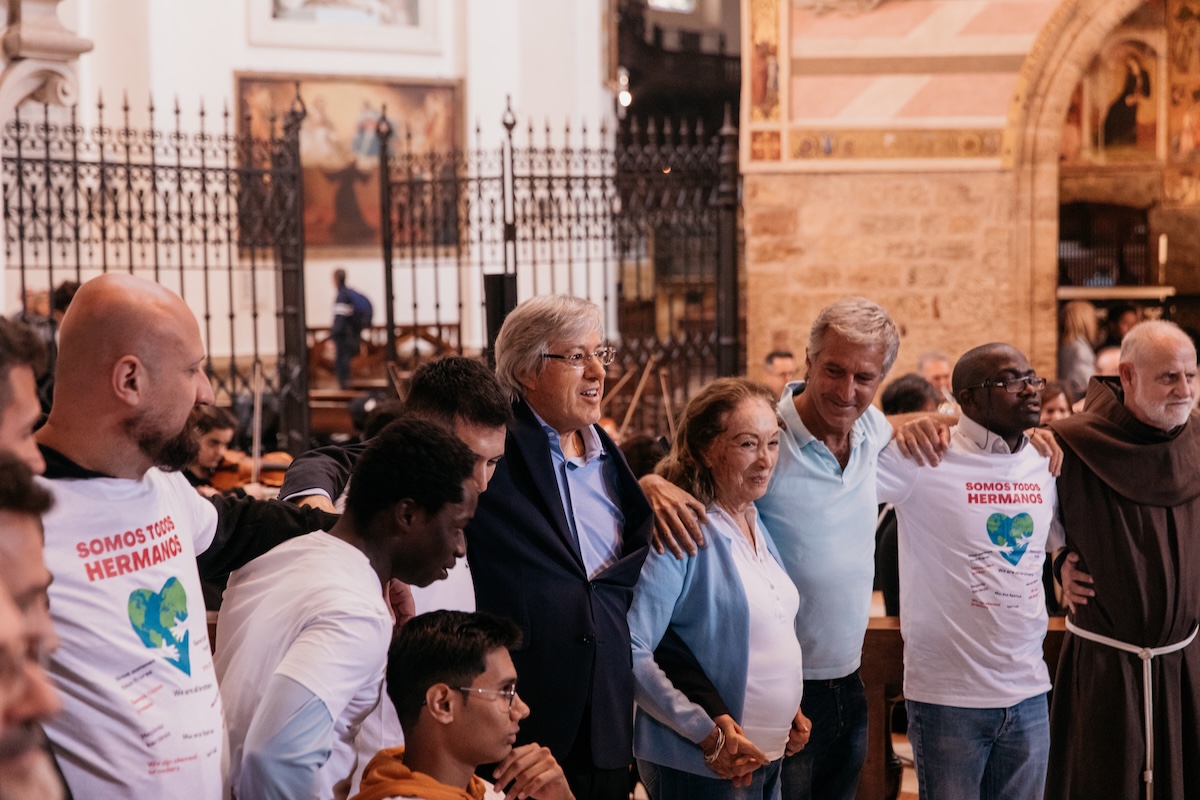 Alejandro Roemmers nos invita a “Un abrazo por la humanidad” desde el Planetario de Buenos Aires
 Buenos Aires homenajeó a Alfredo Di Stéfano a 100 años de su nacimiento y declaró Huésped de Honor a Emilio Butragueño
 El futuro del turismo se construye en equipo